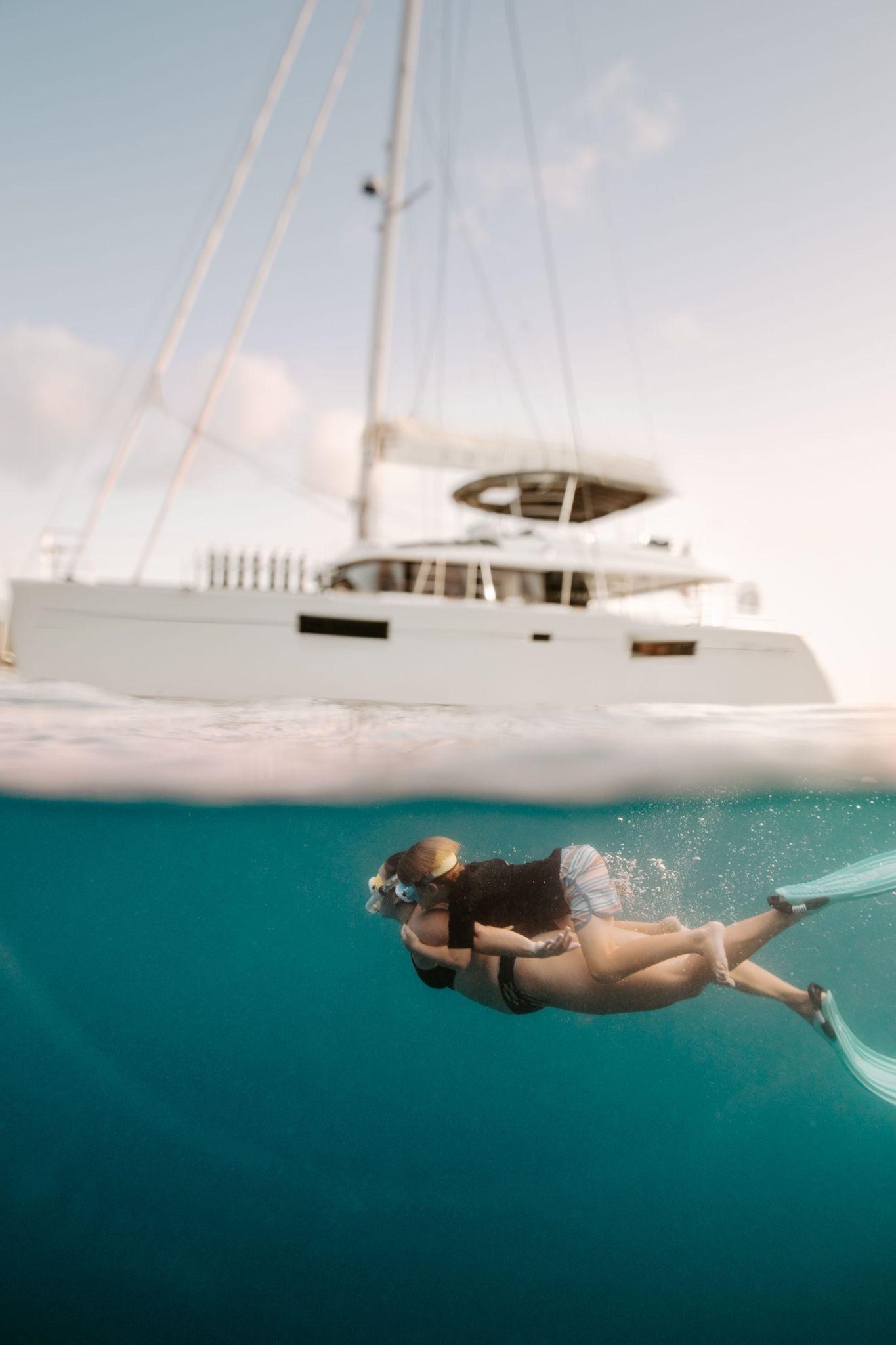
The British Virgin Islands (BVI) is a paradise for water enthusiasts, offering crystal-clear waters perfect for snorkeling, diving, and swimming. Knowing the BVI water temperature by month will help you plan the best time for your all-inclusive BVI yacht charter and aquatic adventures.
What Is the British Virgin Islands Water Temperature Throughout the Year?
The water temperature in the Virgin Islands remains consistently warm throughout the year, making the British Virgin Islands (BVI) perfect for a crewed yacht vacation. Nestled in the heart of the Caribbean Sea, the BVI boasts average water temperatures that range from approximately 78°F (25.5°C) in the cooler months of January and February to a peak of 84°F (29°C) during the summer months of August and September. This consistency ensures that activities on BVI crewed yacht charters, like snorkeling, diving, and swimming, are enjoyable year-round.
The NOAA (National Oceanic and Atmospheric Administration) monitors the region’s sea surface temperature (SST), providing reliable data on the ocean’s warmth. Factors such as trade winds and local weather patterns contribute to slight variations, but overall, the tropical marine climate keeps the water inviting for recreational users and seasoned divers.
When planning your yacht charter to the BVI, rest assured that the water remains warm and clear regardless of the season. This makes it ideal for exploring iconic spots like Tortola, Virgin Gorda, and the Dog Islands. Whether you’re diving into vibrant coral reefs or enjoying paddleboarding in calm coves, the BVI’s water temperature adds to its allure as a premier destination for your next sailing adventure.
BVI Water Temperature By Month
Understanding the BVI water temperature by month can help you plan the best time for your water adventures. Here’s a detailed breakdown of the water temperature in the Virgin Islands throughout the year, including key variations and what to expect each month.
January – March
During the cooler months of January, February, and March, the British Virgin Islands water temperature averages between 78°F and 80°F (25.5°C to 26.5°C). This is a great time for activities like snorkeling and diving, as the clear waters around Tortola, Virgin Gorda, and Jost Van Dyke offer excellent visibility. Cooler trade winds add to the comfort, making this period ideal for recreational users seeking vibrant coral reefs.
April – June
From April to June, the water starts to warm up, averaging 80°F to 82°F (26.5°C to 27.5°C). This period marks the transition from the dry season to the rainy season, but the waters remain calm and inviting. The Caribbean Sea’s warmth enhances experiences like paddleboarding and exploring coastal gems like Peter Island and Road Town. For divers, the rising sea surface temperature (SST) encourages diverse marine life activity.
July – September
The BVI water temperature peaks from July to September, averaging 84°F (29°C). This is the warmest time of the year, perfect for extended swims or relaxing in the turquoise waters of Beef Island or the Dog Islands. While this period overlaps with the hurricane season, most days are sunny, and mornings are ideal for enjoying water activities. NOAA advises monitoring weather forecasts during this time.
October – December
As the year winds down, temperatures cool slightly to 80°F to 81°F (26.5°C to 27°C) from October to December. The tropical marine climate and steady warmth of the Virgin Islands water temperature make this a festive and tranquil period for visitors. Destinations like Spanish Town and Anegada are especially popular, with conditions perfect for diving and snorkeling. The end of the rainy season also brings calm seas and clearer waters.
Is Tortola Water Temperature the Same as the BVI in General?
Most BVI all-inclusive yacht charters start in Tortola, and you may spend more time there at the start or end of your crewed charter yacht. The water temperature in Tortola follows a similar pattern to the overall BVI water temperature by month, as the island is part of the British Virgin Islands in the warm Caribbean Sea. Tortola BVI water temperatures range from 78°F (25.5°C) in the cooler months of January and February to around 84°F (29°C) during the peak summer months of July through September.
While slight variations can occur due to local factors such as water depth, tidal changes, and wind exposure, these differences are minimal. Popular spots around Tortola, such as Road Town and Smuggler’s Cove, maintain warm and inviting conditions year-round, making it a great destination for snorkeling, diving, and other water activities. Whether you’re planning to swim near Beef Island or paddleboard along the Tortola Hills coastline, the water temperature will surely be a highlight of your trip.

Factors Affecting BVI Water Temperature: Local and Global Influences
The BVI water remains warm and inviting year-round, but several local and global factors create slight variations. Understanding these influences can enhance your experience and help you plan water activities more effectively.
Trade Winds and Weather Patterns
The steady trade winds of the Caribbean Sea play a significant role in maintaining the tropical warmth of the water temperature in Virgin Islands. These winds help regulate sea surface temperatures, especially during the cooler months of January to March, ensuring the water remains comfortable even during the dry season. The BVI also sees cold fronts due to North winds in December and January; however, this historically does not affect the water temperature.
Seasonal Changes and Rainfall
The rainy season, which spans from May to November, can affect the BVI water temperature by introducing fresh water into the coastal areas. However, the warm climate minimizes the impact, keeping temperatures stable. Seasonal changes, such as the dry season from December to April, contribute to clearer, more inviting waters.
Depth of Sampling and Time of Day
Measurements of sea surface temperature (SST) often vary based on the depth of sampling and the time of day. Shallower areas, like those near Tortola or Jost Van Dyke, tend to warm faster during the day, while deeper waters remain cooler. Afternoon water activities usually enjoy the warmest temperatures.
Topographic and Local Effects
The British Virgin Islands’ unique geography, including shallow bays and coastal areas around Virgin Gorda and Peter Island, can create localized differences in water temperature. Areas with low mountains, like the Tortola Hills, may experience more shade, with slightly cooler nearby waters.
Global Climate Patterns
Global influences like tropical hurricanes and climate change can temporarily alter water temperatures. Events like Hurricane Irma can stir deeper, cooler waters to the surface, while longer-term trends may gradually increase ocean temperature in the West Indies region.
Sunshine and Diurnal Effects
The BVI weather ensures abundant sunshine year-round, with diurnal effects (day-night temperature changes) causing slight daily fluctuations. Warmer water is typically observed in the afternoon when the sun is strongest, making it an ideal time for water activities.
Best Time to Visit the BVI for Diving, Swimming, and Other Water Activities
April to September offers the warmest water temperature in the Virgin Islands, averaging around 82°F to 84°F (27.5°C to 29°C). These months are ideal for extended swims, leisurely paddleboarding, and long snorkeling sessions, as the inviting waters make it easy to stay immersed for hours. Popular spots like Virgin Gorda, Tortola, and Jost Van Dyke are perfect for exploring coral reefs and vibrant marine life during this time.
For those who prefer slightly cooler conditions, January through March sees temperatures ranging from 78°F to 80°F (25.5°C to 26.5°C). The milder waters are particularly appealing to divers, as the clear visibility and refreshing temperatures enhance the experience of exploring shipwrecks and underwater ecosystems near Beef Island and the Dog Islands.
What is the Weather Like in the British Virgin Islands?
The British Virgin Islands enjoy a tropical marine climate with warm daily temperatures and consistent trade winds. Throughout the year, daytime monthly temperatures typically range from 82°F to 88°F (28°C to 31°C), while nighttime brings a drop in temperature ranging between 70°F and 80°F (21°C to 27°C). This stable climate makes the BVI a popular destination for travelers seeking pleasant weather year-round.
The region experiences a wet season from May to November, with September and October often being the wettest months. During this period, rain showers spike but are usually followed by sunshine. The dry season spans from December to April, offering sunnier skies, the hottest temperatures, and lower humidity. Many consider this the ideal time to visit.
It’s important to note that the Atlantic hurricane season runs from June to November, with the highest risk typically between late August and mid October. Hurricanes are a real threat during this time, and due to insurance requirements, most charter yachts can not operate in the BVI from August to mid-October. Check out our climate guide to BVI Weather By Month for a detailed look at monthly weather trends. It breaks down average temperatures, monthly rainfall, and the best times to plan your trip.